
Dog Training in Chicago High-Rises: How to Handle Elevators and Hallway Challenges
Living in a Chicago high-rise comes with amazing views… and some serious dog-training challenges. Tight hallways, surprise encounters, echoing sounds, and fast-opening elevator doors can make even the most confident dog react unexpectedly. For puppies, newly adopted dogs, or reactive dogs, these close-quarter moments can feel overwhelming, but with the right strategies, your dog can learn to stay calm and confident in the busiest parts of your building.
If your dog already struggles with reactivity, structured reactivity training can make these environments feel much safer for them.
This guide breaks down the most common elevator and hallway challenges, why they happen, and how to help your dog move through your building without stress.

Why High-Rise Living Is Hard for Dogs
High-rises create environments where dogs have:
limited space to pass other dogs
no ability to create distance
loud, unpredictable noise
fast-moving doors
tight corners and blind spots
For sensitive or reactive dogs, all of these can trigger big feelings. Understanding the environmental pressure is the first step to reducing it.
Hallway Challenges and How to Navigate Them
1. Use “Check First” Before Entering the Hallway
Teach your dog to pause at the door while you look for dogs, people, or carts. This prevents surprise encounters.
2. Move in Curved Paths, Not Straight Lines
Stepping to the side or creating an arc gives your dog space to pass stimuli without feeling trapped.
3. Reward for Looking Back at You
Anytime your dog disengages from a noise or another dog, mark it (“yes!”) and reward. This keeps their brain thinking instead of reacting. If your dog needs foundational support in busy buildings, private dog training in Chicago can help build these skills.
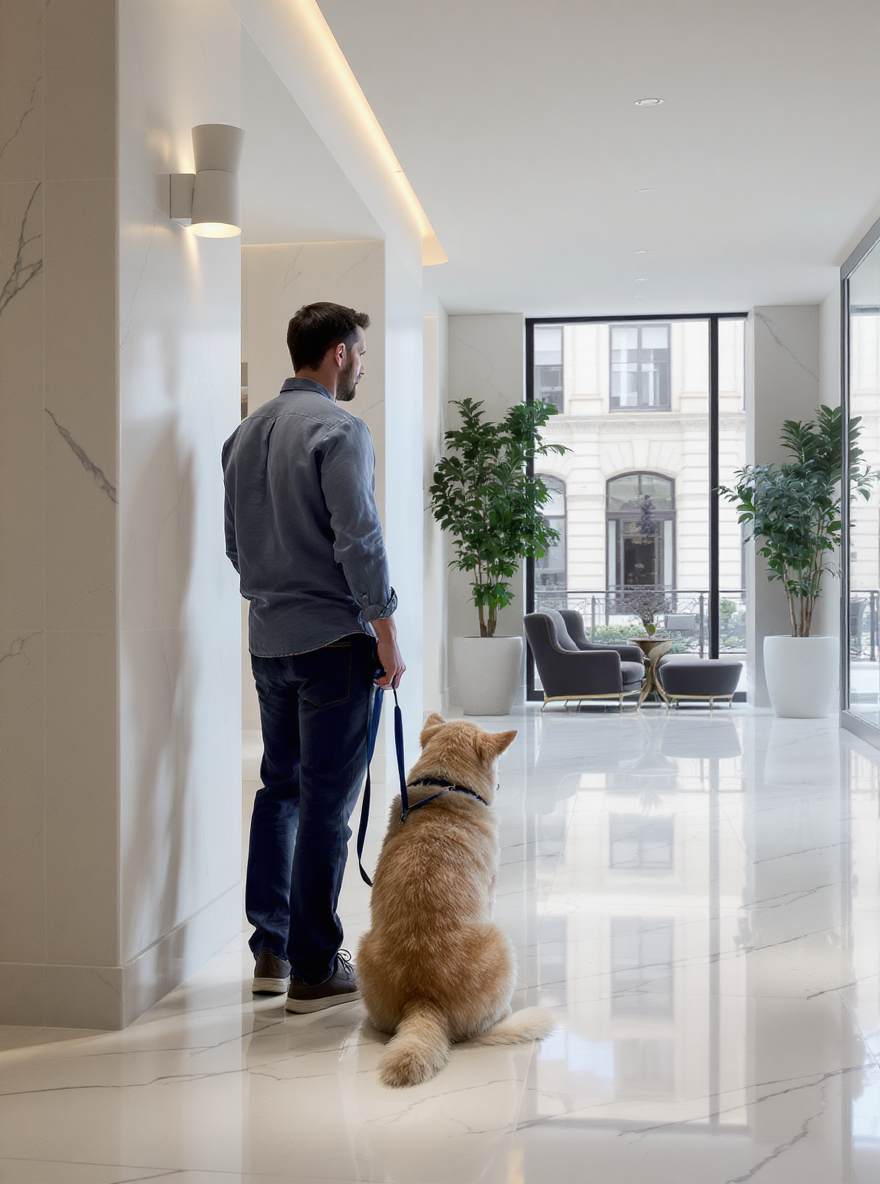
Elevator Training: A Calm Elevator Ride Starts Before the Doors Open
Elevators can be overwhelming because:
Dogs don’t know what’s behind the doors
Encounters are often head-on
Dogs feel trapped with no escape
Movement + sound increases arousal
Here’s how to change that…
1. Step Back When the Doors Open
Instead of standing at the threshold, move your dog back 3–5 feet. This gives you space if someone steps out with a dog.
2. Teach “Exit and Turn”
Practice exiting the elevator by making an automatic U-turn. This keeps your dog from staring down whatever is outside the doors.
3. Use Off-Peak Times to Build Reps
Ride during quiet hours and reward:
sitting
eye contact
ignoring sounds
relaxing body language
If you’re unsure how to manage tight-space leash handling or structured exits, a pet trainer in Chicago can walk through your building with you and demonstrate exactly what to do.
Managing Surprise Encounters
No matter how careful you are, you will eventually run into a dog or person unexpectedly.
What to do:
Create distance where you can (step into an alcove, doorway, corner)
Keep your voice calm and neutral
Avoid pulling the leash tight
Turn your dog’s body away from the trigger
Use quick reward patterns (sprinkle treats, hand target, 1-2-3 game)
Confidence comes from having a plan.
Lobby Life: Practicing Patience in Shared Spaces
The lobby can be chaos — packages, neighbors, food smells, deliveries, and lots of movement.
To help your dog handle it:
Practice short “wait” sessions near the lobby doors.
Reward calm sits or eye contact while you wait for the elevator.
Gradually add distractions like people walking by or doors opening.
If your dog starts to get excited, step outside briefly and reset before trying again. Short, calm repetitions build confidence better than long, stressful ones.
Tools and Equipment That Help
Front-clip harness: Helps reduce pulling in tight spaces without creating tension.
Treat pouch: So you’re always ready to reinforce good behavior.
Longer leash training elsewhere: Builds better leash manners for those tight hallway moments.
Avoid retractable leashes in hallways — they make control harder and can spook neighbors.
When You Should Work With a Trainer
If hallway or elevator moments are causing:
barking
lunging
growling
pancaking / freezing
dragging to get away
pacing or whining
…it’s time for professional support.
A trainer can help choose the right building routes, reduce pressure points, and set up safe practice scenarios. If you’re located in Chicago, explore my services to learn more about how I can help.
Frequently Asked
1. Why is my dog reactive in the hallway but not outside?
Hallways remove distance and escape routes, making dogs feel trapped. This increases reactivity even in dogs who are calm outside.
2. How do I stop my dog from barking at noises in the hallway?
Reward your dog for hearing noises before they react. This builds positive associations and reduces alert barking over time.
3. What should I do if the elevator opens and another dog is right there?
Step back to create space, turn your dog away, and move in an arc. Distance reduces intensity quickly.
4. Can I fix hallway reactivity in an apartment building?
Yes! With training that focuses on thresholds, distance, pattern games, and predictable routes, most dogs improve significantly.
5. Should my dog greet other dogs in the hallway or elevator?
No—Greetings in tight spaces increase tension and risk negative interactions.
6. How long does it take to improve elevator behavior?
With consistent practice, many dogs improve in 2–6 weeks, depending on age, temperament, and building environment.
Explore My Services
Puppy Training | Obedience Training | Reactivity Training | Behavior Modification | Puppy Board & Train
Questions about private training, process, or board and train? Reach out!