
Leash Walking Training in Chicago: From Pulling to Polite Walking
If walking your dog feels like something you mentally prepare for, this post is for you.
Leash pulling is one of the most common reasons people reach out for training in Chicago. Not because it’s embarrassing (okay, sometimes that), but because it makes daily life harder than it needs to be. Walks turn stressful. Routes get shorter. Motivation drops. Everyone’s patience gets thinner.
And despite what the internet says, leash walking issues are rarely about a dog being “bad” or untrained.
They’re about context.
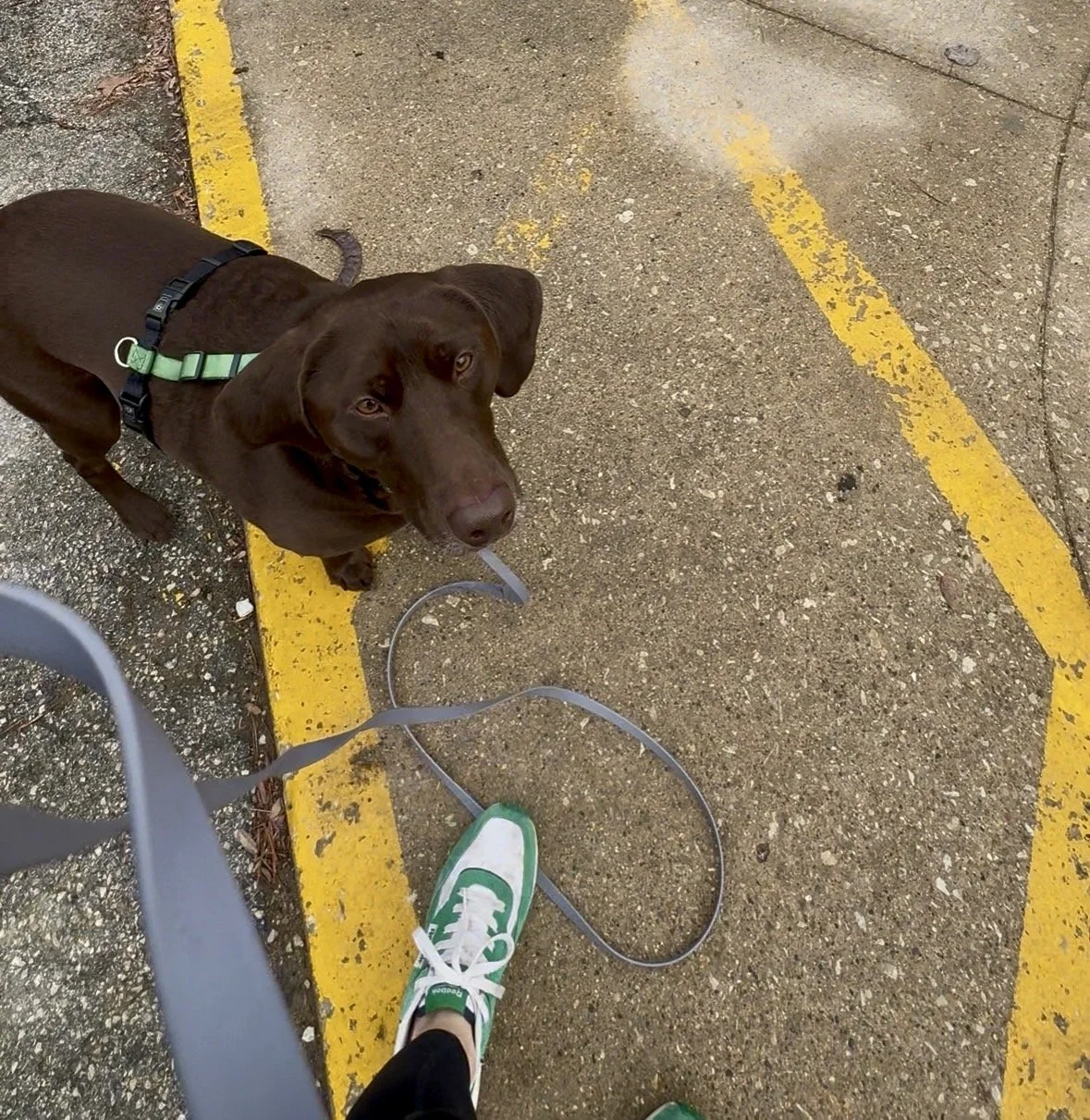
Why leash walking is harder in Chicago
Most dogs don’t pull because they’re stubborn or “dominant.”
What they struggle with is walking in busy environments, repeatedly, with zero margin for error.
City walks involve:
Constant decision-making
Tight timing (doorways, corners, crosswalks)
Repeated exposure to things the dog doesn’t control
That’s a lot to ask from an animal who processes the world through smell, movement, and distance.
When pulling shows up, it’s usually doing a job:
Getting away from something uncomfortable
Getting closer to something exciting
Releasing frustration from being restrained
This is why leash walking problems often overlap with reactive dog training in Chicago. The leash itself doesn’t create the issue, but it definitely amplifies it.
Loose leash walking vs. “perfect heel”
There’s a big difference between…
Teaching a dog how to walk with you
Expecting a dog to never feel pulled by the environment
Polite leash walking is about:
A mostly slack leash
The dog staying connected enough to respond
Recovery after distractions
It’s not about the perfect heel. If your dog can sniff, look around, and still come back to you—that’s success.
Why pulling sticks around (even after you’ve tried training)
Most people have tried something before calling a trainer.
Usually a mix of:
Stopping when the dog pulls
Turning around
Shortening the leash
Treats that work until they don’t
These tools aren’t useless, but they’re incomplete.
Pulling persists when:
The environment is more reinforcing than the handler
The dog doesn’t have a clear alternative behavior
The dog is already over threshold before the walk really starts
This is why at home dog training is such an important part of leash work. We can slow things down, control variables, and build skills before layering in difficulty.
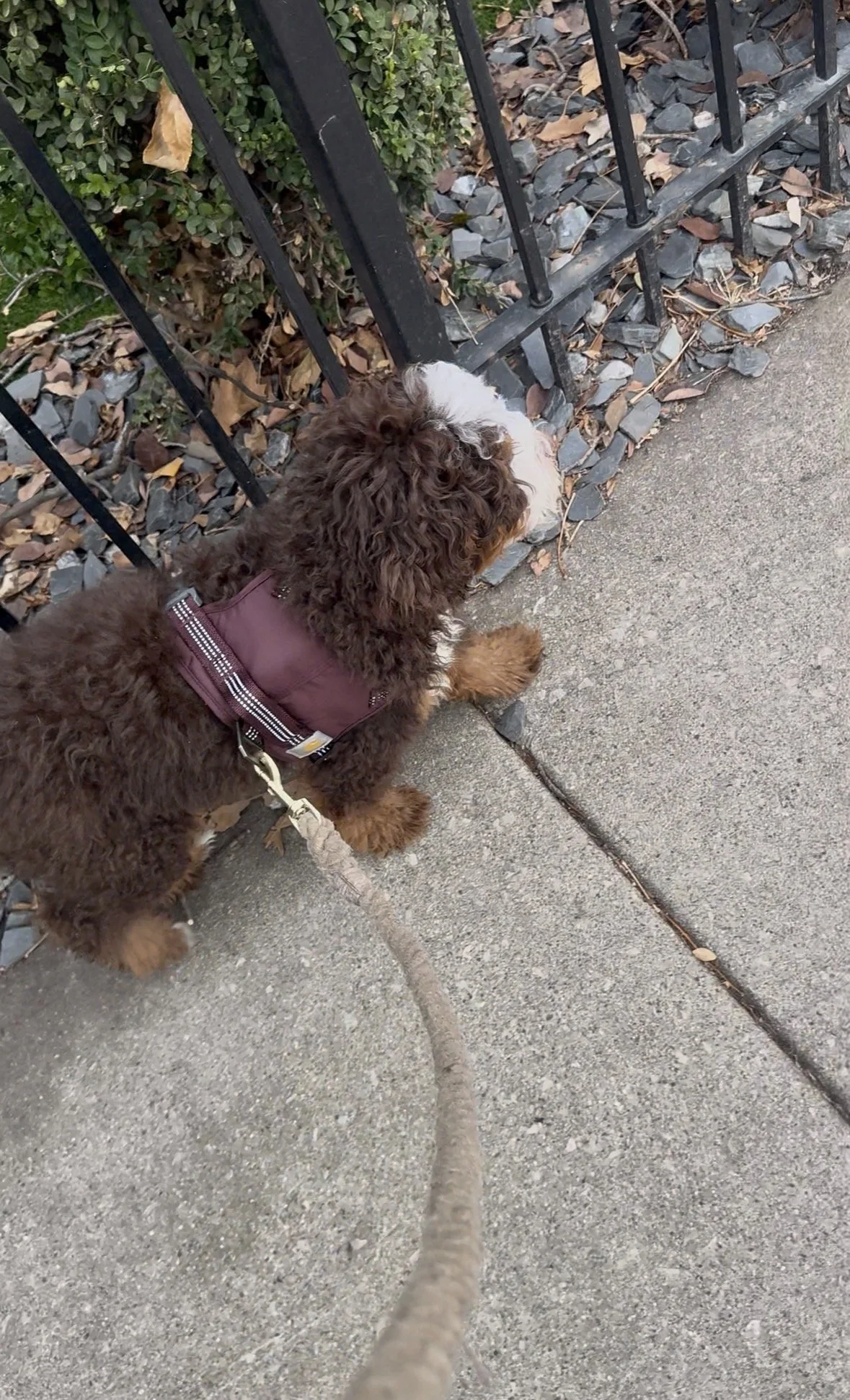
What leash walking training focuses on
Good leash walking training isn’t just about the walk. It’s about the foundation behind it.
We work on things like:
Engagement (your dog noticing you exist)
Emotional regulation
Clear communication through the leash
Pattern games that create predictability
Reinforcement for calm choices
Yes, we address mechanics. But we also address how your dog feels during walks. Because a calm dog walks better.
Leash walking and reactivity often go together
If your dog barks, lunges, freezes, or loses their mind on leash, walking politely isn’t just a skill issue. It’s an emotional one.
For these dogs, leash walking training blends directly into reactive dog training in Chicago. The focus shifts from “don’t react” to:
Creating space early
Teaching predictable movement patterns
Giving the dog a job that reduces pressure
We’re not trying to suppress reactions. We’re trying to make the walk feel manageable.
Why at-home training matters for leash skills
Dogs don’t generalize well.
Just because your dog can walk nicely in one spot doesn’t mean they can do it everywhere.
That’s why at home dog training is so effective for leash work. We can:
Start inside or in quiet hallways
Practice doorway exits (huge trigger moment)
Build skills in your actual neighborhood
Address routines before the walk even starts
Leash walking success often begins before you clip the leash on.
Common advice that sounds good but doesn’t help much
A few things that tend to frustrate people more than they help:
“Just tire them out first”
“They’ll grow out of it”
“You need to be more firm”
Leash walking isn’t a confidence contest. It’s a skill layered on top of emotional regulation. If the foundation isn’t there, no amount of confidence fixes it.
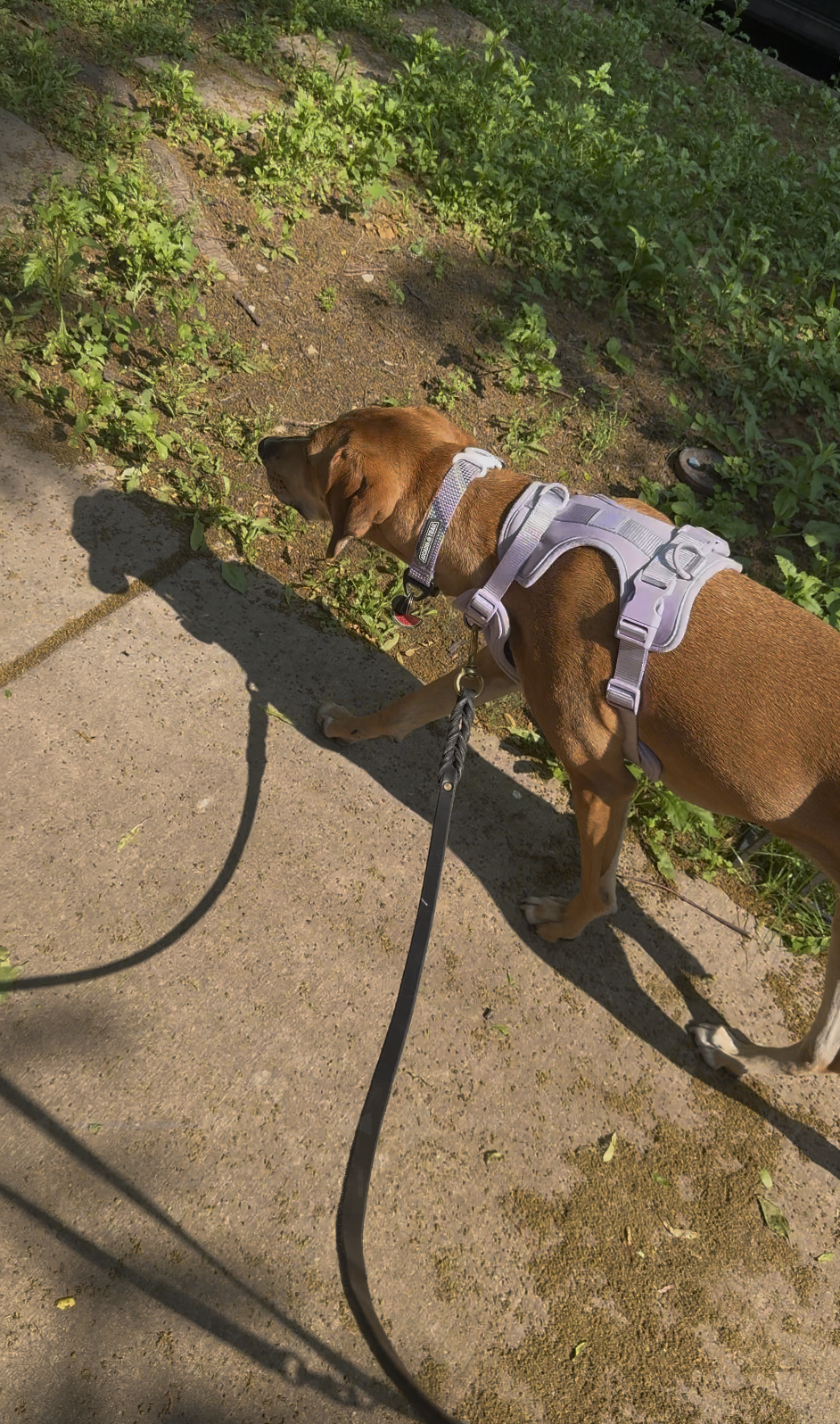
What progress looks like
Progress is not:
Zero pulling overnight
Perfect walks every day
Progress is:
Faster recovery after a trigger
More check-ins
Less intensity
You feeling more confident holding the leash
If walks feel less draining over time, you’re on the right track.
When it’s time to bring in help
If walking your dog feels like a daily stressor—or something you actively avoid—it’s worth getting support.
Especially if:
Your dog is reactive or fearful
Walks are getting shorter, not easier
You feel tense before you even leave the house
Ready to make walks easier?
You don’t need a dog who walks perfectly. You need a dog who can walk functionally, and a plan that fits your life. If leash walking is the thing that keeps coming up, we can help you untangle it.
Schedule a consultation to get started with leash walking and behavior training in Chicago.
No drills, no shame about what you’ve done in the past, just better walks.