
Multi-Dog Household Training: Managing Multiple Dogs in Chicago Homes
Living with multiple dogs is not just living with more dogs. It is living with more relationships, more emotional feedback, and more moments where dogs have to negotiate space with each other. In Chicago homes, where dogs often share smaller living areas and tighter routines, those negotiations happen constantly.
Most multi-dog household issues are not about aggression or dominance. They are about pressure building faster than dogs can handle it.
Multi-dog household training is about lowering that pressure so dogs can make better choices and live together more comfortably. That includes supporting the dogs as individuals and supporting the humans who are managing the whole system.

Why problems start in multi-dog homes
Dogs are social animals, but that doesn’t mean they want constant interaction.
In a multi-dog home, dogs are often expected to share everything. Space, access to people, movement through the house, and even rest time all overlap.
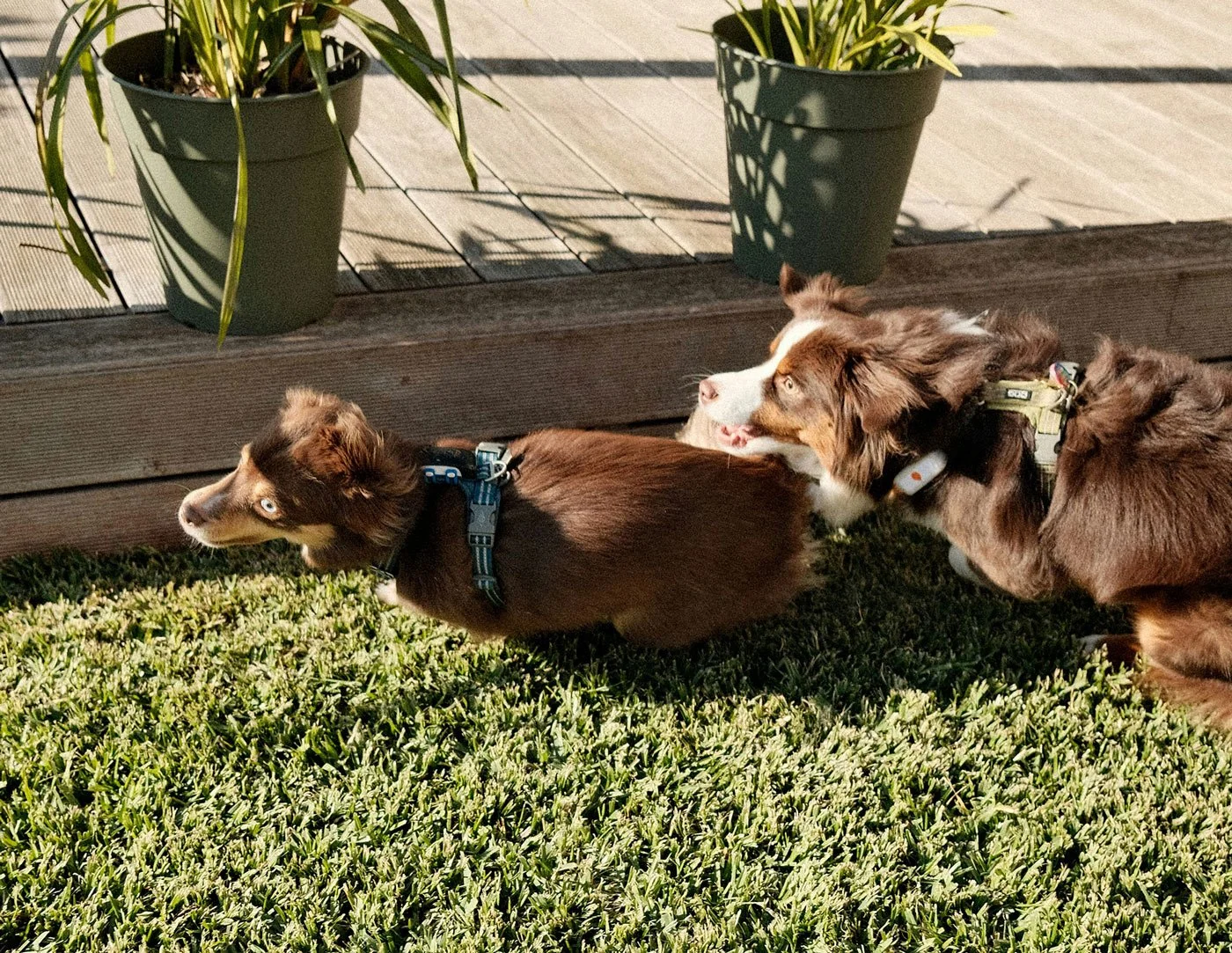
Over time, dogs may start monitoring each other closely. This often looks subtle at first. One dog always watching the other. One dog inserting themselves when the other approaches a person. One dog choosing to leave rooms entirely.
These behaviors are easy to miss or misread as personality quirks. In reality, they are signs that dogs are feeling crowded and unsure how to disengage safely.
When dogs do not know how to opt out of interaction, tension builds quietly until it finally shows up as conflict.
Why city living increases pressure
Chicago homes add extra challenges to multi-dog dynamics. Narrow hallways, shared entryways, and limited outdoor decompression space mean dogs interact more frequently and with fewer escape options.
Noises from your apartment building, honking cars at the grid-locked intersection, and unpredictable schedules also keep dogs in a higher state of alert. When dogs already feel on edge, sharing space with another dog becomes harder. Small stressors stack, and dogs have fewer chances to reset.
This is why multi-dog households that felt manageable in other environments can feel overwhelming in the city, even when the dogs themselves have not changed.
The role of management in successful households
One of the biggest misunderstandings about multi-dog training is the idea that management is temporary or a failure. In reality, management is how dogs stay successful while learning.
Management means setting up the environment so dogs do not have to make difficult choices constantly.
This often includes things like:
Giving dogs separate resting areas
Controlling access to high-value spaces
Using gates or pens to create breathing room
When dogs are not pushed into stressful interactions, they are able to relax.
Relaxation is the foundation for learning and behavior change.
Good management also protects the human side of the equation.
When owners are less stressed, they are more consistent, more patient, and better able to follow through with training.
Why dogs need individual skills first
Dogs in the same household influence each other’s emotional state. If one dog becomes excited, anxious, or frustrated, the other often follows. Without individual skills, dogs rely on each other for cues about how to feel.
Individual training and enrichment time teaches dogs how to:
Regulate their own arousal
Respond to cues without competition
Settle without tracking another dog
This is also where many owners feel stretched thin.
It can be hard to give each dog one-on-one time, especially with busy schedules.
Even small amounts of intentional individual time matter. Short solo walks, separate enrichment, or quiet time with one dog at a time can dramatically change household dynamics.
When each dog feels fulfilled and secure on their own, group dynamics become much easier.
Shared spaces and social friction
Some multi-dog conflict begins in shared spaces. Doorways, kitchens, couches, and beds all predict access to people or movement. Dogs quickly learn that controlling these spaces gives them information and influence.
Signs of social friction often include:
Blocking movement through the home
Staring or freezing when another dog approaches
Avoiding certain rooms altogether
Training does not focus on correcting these moments in isolation. Instead, it focuses on changing the overall pattern so dogs no longer feel the need to manage access in the first place.
Addressing tension before it turns into conflict
Dogs almost always signal discomfort before a fight happens.
These signals are quiet and easy to overlook. When they are missed, dogs may escalate simply because their earlier communication did not work.
In many multi-dog households, one dog is often the main driver of tension. That dog may be more anxious, more reactive, younger, or simply more intense. The other dogs respond to that energy.
Behavior-focused training aims to reduce the emotional load that leads to these moments, rather than just interrupting behavior when it appears.
Walking multiple dogs at once
Walking multiple dogs in Chicago is not just a training issue. It is part of the household system. Dogs that struggle together inside often struggle together outside as well.
Many multi-dog households benefit from walking dogs separately for a period of time. This allows each dog to build confidence and loose leash skills without feeding off the other’s energy. Once walks are calmer individually, shared walks often improve naturally.
This approach reduces frustration for both dogs and owners and helps dogs practice regulation in a busy environment.
Adding or transitioning dogs in the home
Introducing a new dog shifts every existing relationship in the household. Even confident dogs may struggle when routines change and space feels less predictable.
New dogs need time to observe and decompress before being expected to interact freely. Puppies and newly adopted dogs especially benefit from clear routines, protected rest time, and individual attention with their people.
Supporting each dog separately during this phase prevents resentment, tension, and long-term stress from taking hold.
What success looks like
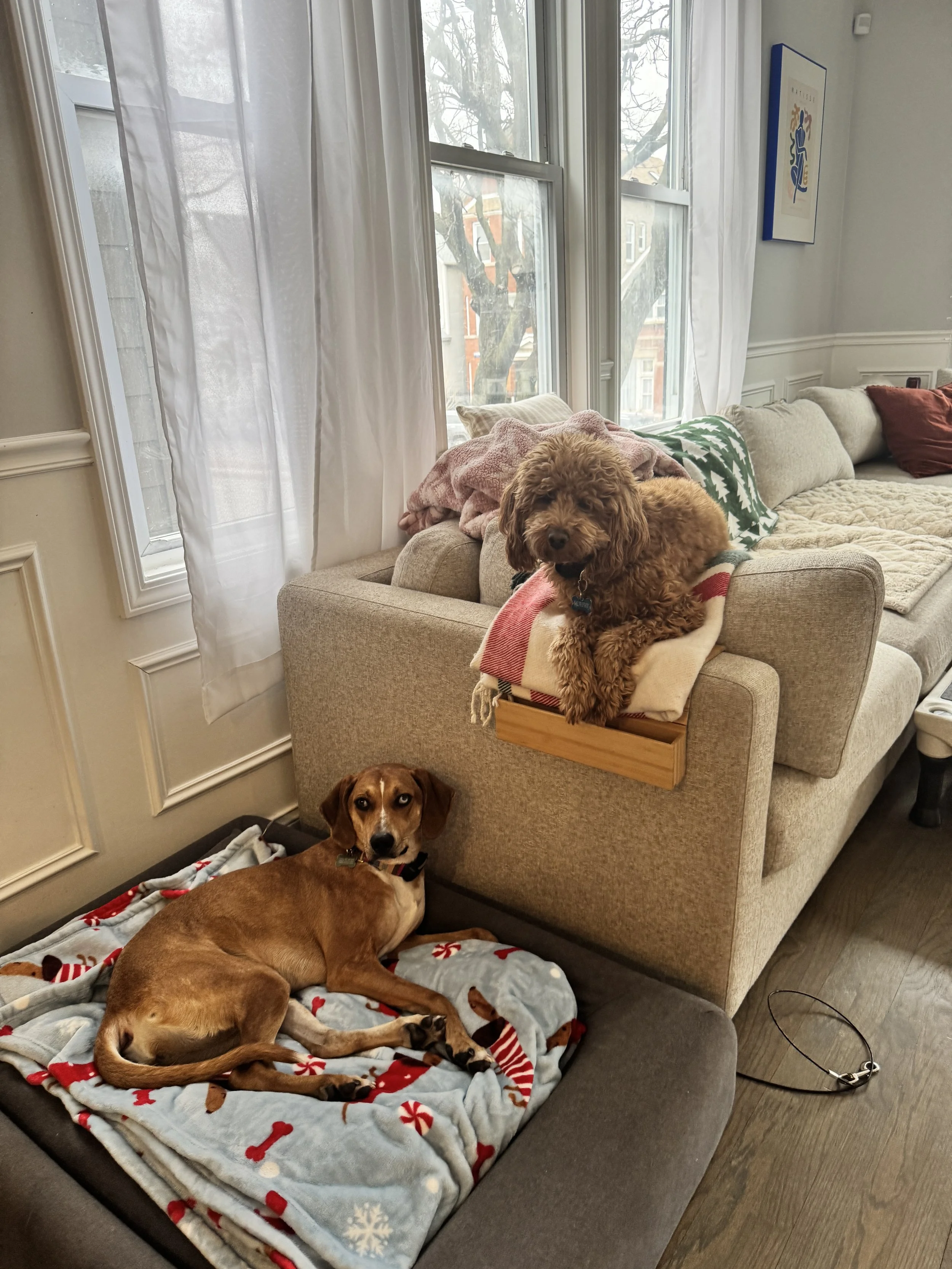
Successful multi-dog households are not conflict-free. They are homes where dogs have options and do not feel pressured to engage, and where owners are not constantly exhausted.
Progress looks like dogs choosing space, settling more easily, and recovering quickly from excitement. It also looks like owners feeling capable again and able to enjoy their dogs individually and together.
With thoughtful structure and realistic expectations, living with multiple dogs in a Chicago home can feel calmer and more sustainable. Training works best when it respects the emotional complexity of multi-dog households and supports each dog and human as individuals first.
How I help with multi-dog households in Chicago
Multi-dog dynamics aren’t typically resolved on their own.
I work with Chicago households through private, in-home training sessions focused on real-life routines. That includes helping dogs feel more comfortable sharing space, identifying which dog is driving tension, building individual skills, and creating plans that reduce owner burnout.
Training is tailored to your home, your dogs, and what you actually have the capacity to maintain.
Learn more about private multi-dog household training below, or reach out to book a free consultation to chat about your dogs.