
How to Introduce Dogs When One Is Reactive: A Safe, Step-by-Step Guide
Introducing two dogs is stressful enough, and when one of them is reactive, the pressure skyrockets. Many owners worry about fights, setbacks, or making the reactivity worse. The good news? With the right structure, the right pace, and the right environment, reactive dogs can successfully meet new dogs and even build positive associations.
This guide walks you through the safest, trainer-approved steps for introducing dogs when one struggles with reactivity, especially in a busy city like Chicago.
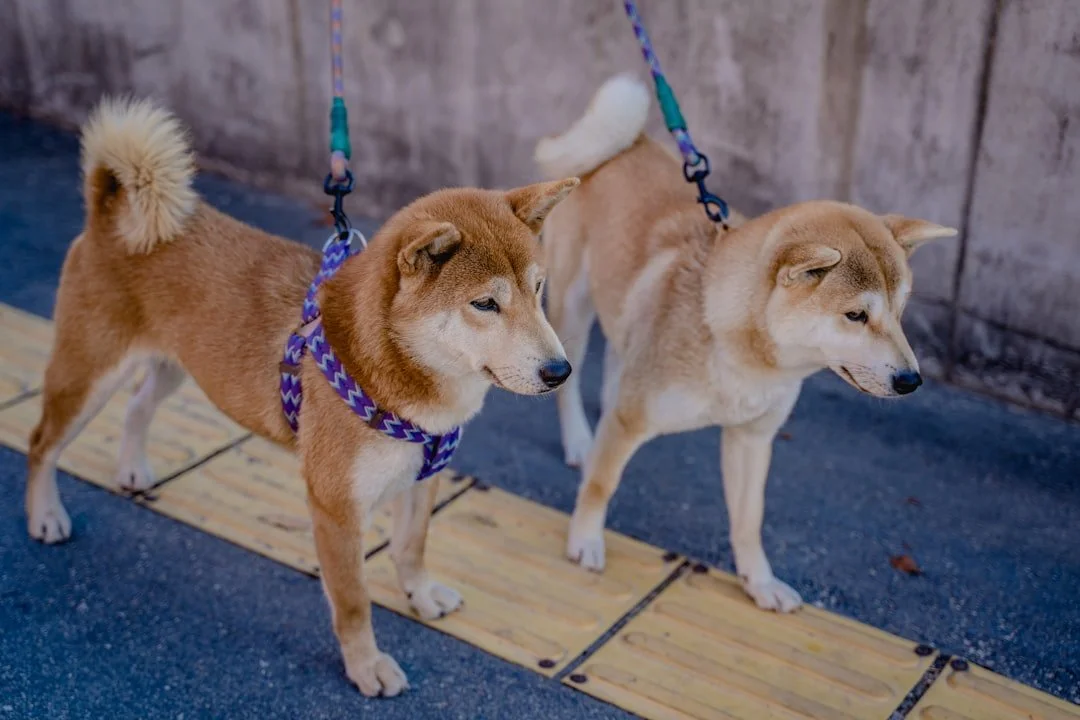
What Reactivity Actually Means
Reactivity is one of the most misunderstood behavior challenges in dogs. People often label reactive dogs as “aggressive,” “dominant,” or “bad with other dogs,” when in reality, most reactive behaviors are rooted in big feelings — fear, uncertainty, frustration, or overexcitement.
A reactive dog isn’t trying to be difficult. They’re communicating the only way they know how.
Common reasons dogs become reactive include:
Feeling unsafe or unsure around other dogs
Frustration when they can’t greet
Past negative experiences with unfamiliar dogs
Overarousal and difficulty regulating emotions
Protective feelings toward their guardian or environment
Reactivity is not a personality trait — it’s an emotional response shaped by experience, genetics, and environment.
Common types of reactivity:
Fear-based reactivity: The dog wants distance and safety.
Frustration-based reactivity: The dog wants to greet but can’t manage the emotional intensity.
Overarousal: Too much energy, too fast.
Barrier frustration: Being behind a leash, gate, or window increases tension.
With thoughtful structure and training, most reactive dogs can build the skills needed to coexist peacefully with others, even if they never become highly social “dog park dogs.”
Before You Even Think About an Introduction, Evaluate.
If one dog is reactive, you’ll want to set the stage carefully before the dogs ever see each other. Rushing this part is one of the top reasons introductions go poorly.
Management Comes First
Your reactive dog should have the tools, space, and support needed to stay under threshold. This often means:
Starting with distance
Using neutral spaces
Keeping leashes loose
Avoiding crowded or unpredictable environments
Know Your Dog’s Threshold
A dog’s threshold is the point where they can no longer think, listen, or process. Your goal is to keep both dogs below threshold.
Signs a dog is nearing threshold:
Stiffening
Staring
Holding breath
Ignoring cues
Barking, lunging, whining
If your reactive dog can’t recover within 10–20 seconds after seeing another dog at a distance, they’re not ready for introductions yet. Work on foundational skills and emotional regulation first.

Before the Meeting, Decide Whether the Dogs Are Actually Compatible
Not all dogs are meant to be friends, and that’s okay! As humans, we certainly don’t like everyone we meet. Some dogs simply prefer space, neutrality, and predictability over being friends with other dogs.
Questions to ask yourself before the meet and greet:
Does your dog enjoy other dogs, or merely tolerate them?
Has your dog shown any bite history or escalated reactions?
Can both dogs walk past each other at a distance without distress?
Are both owners aligned on structure, pacing, and safety?
If you’re unsure, it’s always better to go slow or consult a trainer.
Then, Choose the Right Location for Reactivity-Friendly Introduction
Preparing the environment and having a plan can make the experience smoother for both dogs.
Location makes or breaks the introduction. Avoid tight spaces such as:
narrow sidewalks
small apartment hallways
elevator lobbies
dog parks
small backyards
Ideal starting locations include:
quiet residential side streets
large parks during low-traffic hours
school fields
spacious parking lots
These give you room to adjust distance quickly.
The Introduction Plan at a Glance
To keep both dogs safe and regulated, follow a simple, predictable flow:
Visual exposure at a distance — dogs see each other but don’t interact.
Parallel walking — slow and structured.
Curved approach, quick sniff-and-go — no direct, head-on greetings.
Indoor coexistence with barriers — baby gate separation.
Supervised off-leash time — only after sustained calmness.
Post-intro relaxation — this is just as important
Phases can take minutes, hours, or multiple sessions — every dog moves at a different pace.
1. Visual Exposure at a Distance
Reactivity Is About Safety, Not Manners
A reactive dog isn’t being stubborn; they’re responding to fear, frustration, or overwhelm. Before introducing dogs, your first goal is to create enough distance that the reactive dog can notice the other dog without going over threshold.
Signs you have enough distance and your dog is comortable:
Soft body language
Able to take treats
Able to disengage without staring
No vocalizing or lunging
Signs your dog isn’t ready to move closer:
Stiff posture
Lunging
Fixation
Slow recovery
Whining or screaming
If you see any of those, pause the process. You’ll need more foundational work first.
2. Parallel Walking
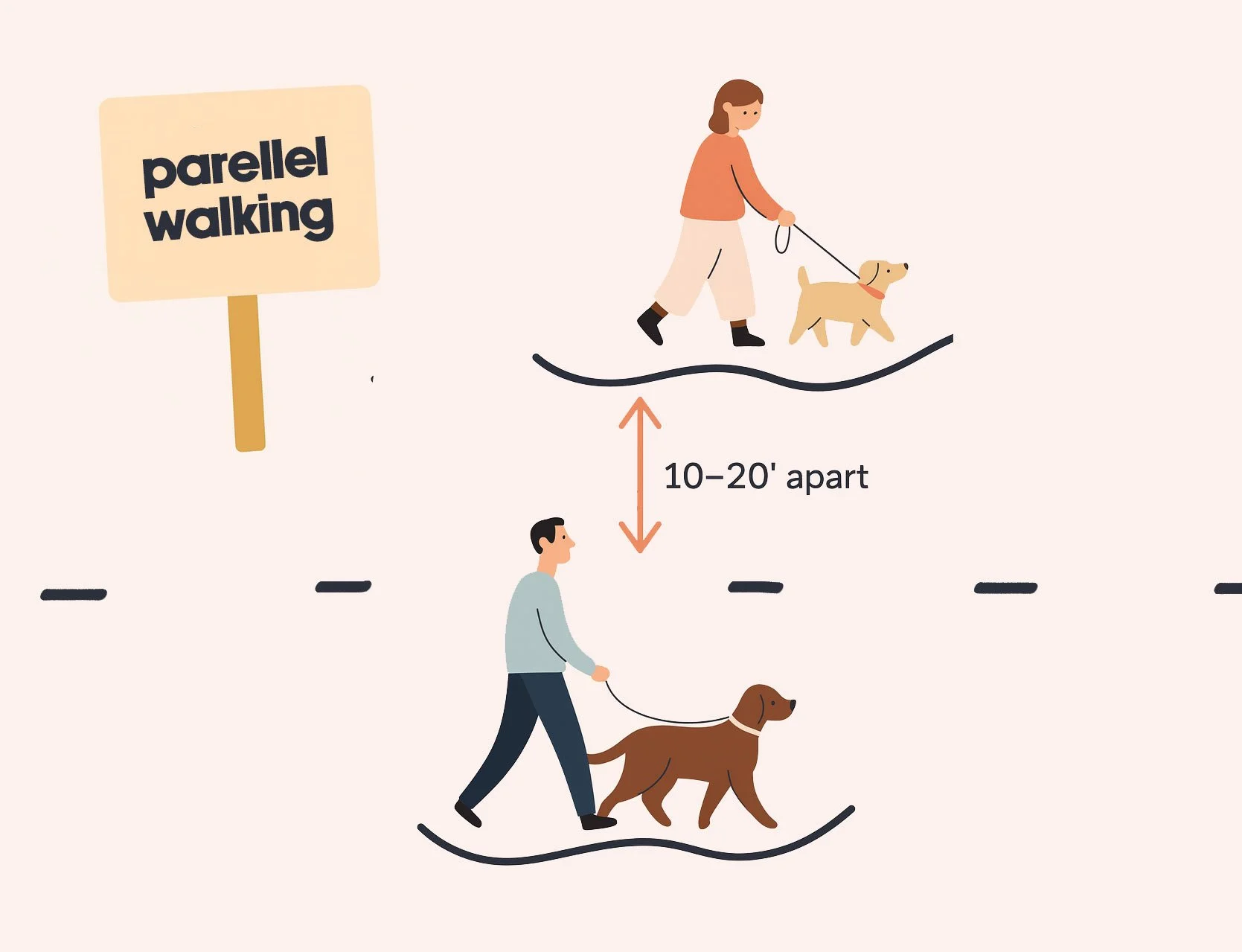
Parallel walking lets both dogs see each other without direct pressure. Neither dog needs to interact — they just coexist while moving forward. Movement helps reduce tension and gives both dogs something to “do” rather than stare, and if you’re unsure how close to walk or how to manage the leash pressure, working with a pet trainer in Chicago can help guide you through the setup safely.
How to set up a parallel walk
Start 20–40 feet apart
Walk in the same direction
Reward your dog each time they look calmly
Slowly decrease distance only if both dogs stay relaxed
This is not a race to get the dogs close together. It’s about building comfort. Most owners walk too slowly or too close during a parallel walk. The goal is forward momentum — movement diffuses pressure and helps prevent fixation.
Look for Positive Body Language Before Moving Closer
Reactivity won’t disappear instantly. Instead, we watch for small shifts:
dog sniffing the ground
soft eyes
loose tail movement
choosing to disengage on their own
taking treats consistently
curved body language
These micro-signals tell us we’re in the learning zone. If you see signs of overwhelm — stiffening, freezing, staring, barking — increase distance immediately.
Signs you need more distance
Staring or freezing
Tail high and tight
Quick, sharp movements
Vocalizing
Pulling toward or away
You’re looking for “green light moments” — tiny signals that the reactive dog is curious but not overwhelmed. These glimmers tell you the emotional environment is safe to proceed.

3. The First Real Greeting
Some dogs will never need (or want) a close-up greeting. Coexistence is still a win. But if both dogs appear relaxed, you can attempt a quick 3-second greeting.
The 3-Second Rule
Allow the dogs to sniff briefly.
Count to three.
Cheerfully call them away.
Walk a few steps to reset.
Short, controlled interactions prevent misunderstandings and give both dogs a confidence boost.
Many introductions go wrong because owners allow:
head-on greetings
prolonged sniffing
tight leashes
face-to-face pressure
A safer greeting looks like:
a loose, curved approach
Brief sniffing
gentle interruption (“this way!”)
immediate movement apart
Short, controlled, and low-pressure. Skip greetings entirely if either dog is stiff, frozen, or hyper-focused. There is no benefit to forcing contact, neutrality is safer and healthier.
4. Indoor Coexistence with Barriers
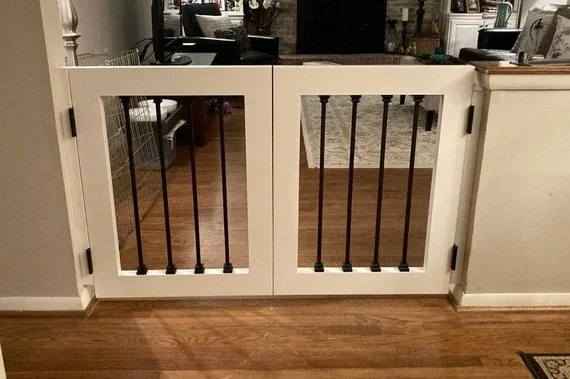
What works outdoors does not translate indoors. Walls, tight spaces, and resources can spike arousal quickly.
Common mistakes indoors:
Letting the dogs roam freely too soon
Having toys, bones, food bowls, or beds accessible
Introducing in tight doorways or hallways
Allowing long or intense sniff sessions
Instead, keep sessions short, structured, and supported with barriers.
Baby gates, pens, and leashes aren’t like training wheels — they’re safety tools that create predictability and reduce the risk of conflict inside the home.
5. Supervised Off-Leash Time
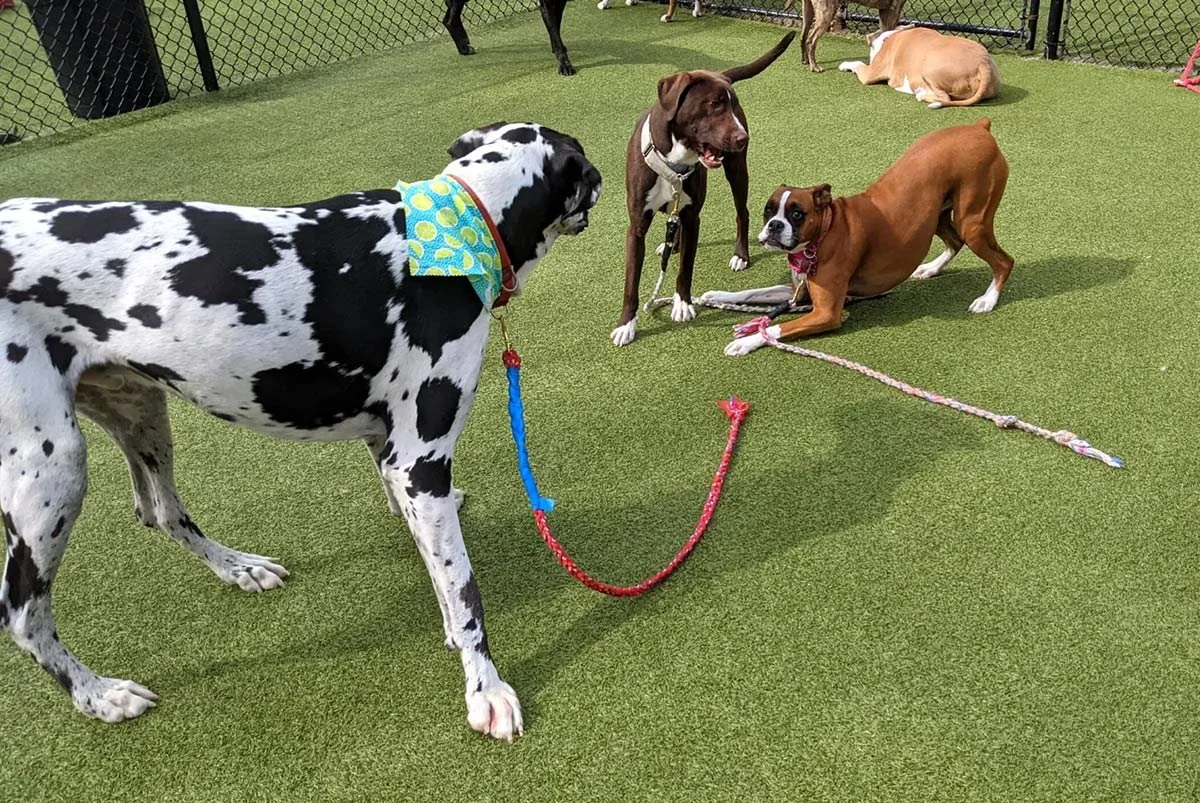
Even though the dogs are “off-leash,” both should wear drag leashes (lightweight 4–6 foot leashes with no looped handle). Drag lines give you a quiet, hands-off way to intervene if:
play becomes too intense
one dog becomes fixated
body language shifts into discomfort
you need to calmly separate them
This prevents grabbing collars (a common trigger for redirected aggression) and keeps things smooth if either dog suddenly needs space.
PRO TIP: Keep Sessions Short and Structured
Off-leash intros are not “set it and forget it.” They should be short bursts of interaction, intentionally paused before things get too exciting.
Think of it like interval training:
Let the dogs play or explore together for 10–20 seconds.
Call them apart for a reset — a short sniff break, a walking lap, or a scatter feed.
Resume only if both dogs look loose and wiggly.
These tiny breaks prevent overarousal, allow emotional resets, and help both dogs stay regulated.
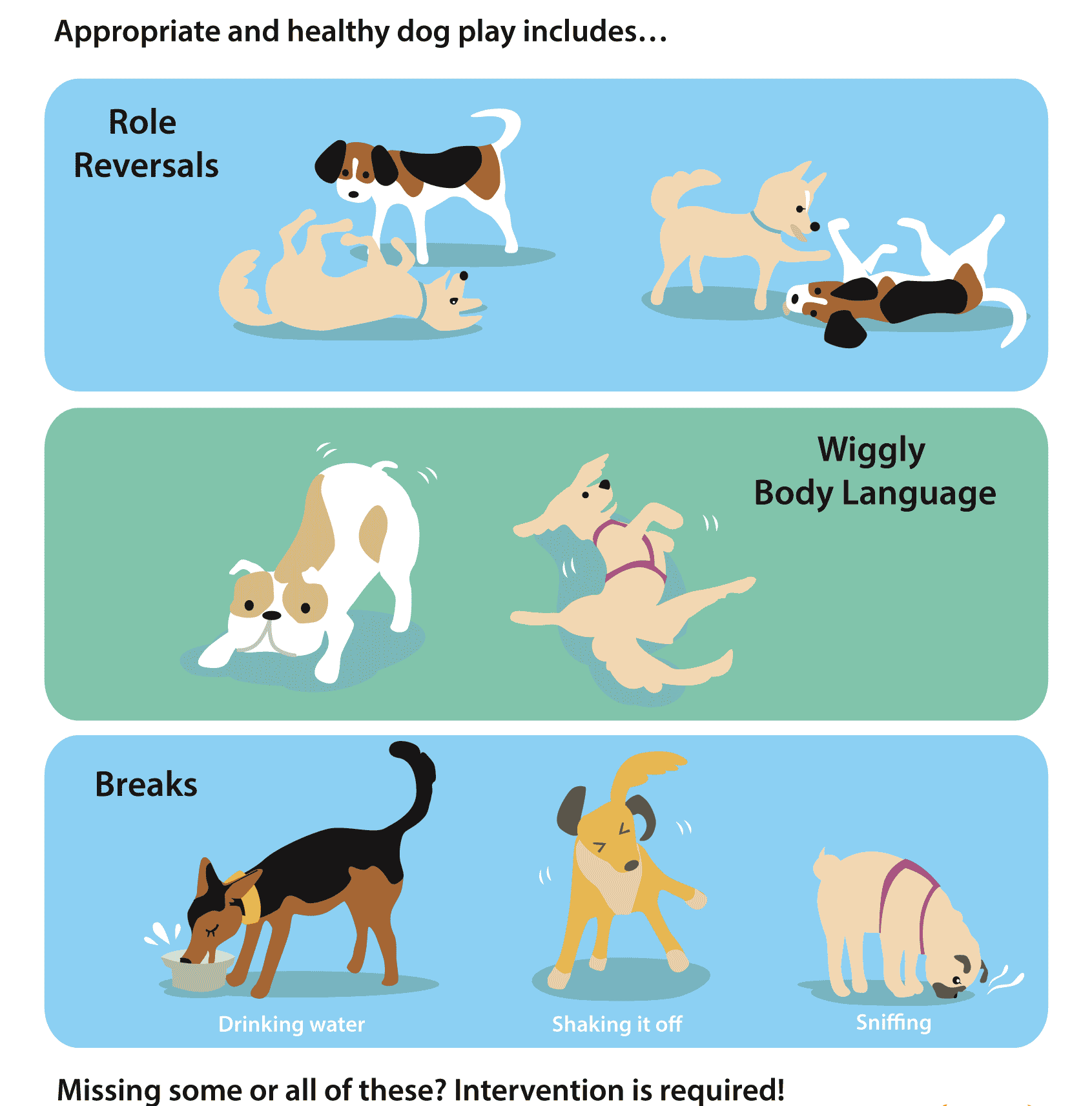
PRO TIP: Watch for Healthy vs. Unhealthy Play
You’re looking for:
bouncy movements
self-handicapping
loose bodies
taking turns chasing or wrestling
frequent natural breaks
You’ll want to interrupt if you see:
humping
pinning
mounting that doesn’t stop
one-sided or nonstop chasing
vocalizations that sound distressed rather than playful
stillness or freezing
intense staring
Shorter, well-regulated sessions are far safer (and more successful long-term) than one long, chaotic play session.
End While Things Are Going Well!
Reactive dogs do best when off-leash time ends before emotions peak. Wrap the session while both dogs feel confident, relaxed, and successful. Ending on a good note teaches the reactive dog that being around another dog is safe, predictable, and not overwhelming.

6. Post-Intro Relaxation
Even if the greeting goes beautifully, the emotional aftermath is just as important.
What to do after the dogs meet:
Take the reactive dog on a decompression walk
Give both dogs downtime, not more social time
Keep intros short and sweet for the next few days
Avoid high-stakes situations too quickly
Many reactive dogs struggle after the event due to adrenaline. Watch for delayed stress signals like pacing, panting, scanning, or sudden clinginess; these tell you the dog needs more decompression.
Common Mistakes to Avoid with Reactive Dogs
Avoid these at all costs:
letting dogs greet on tight leashes
allowing tense face-to-face moments
trying greetings in your hallway or doorway
forcing eye contact
keeping interactions going too long
adding pressure by saying “be nice!” or “say hi!”
The safest intros are short, structured, and optional.
When to Involve a Trainer
A reactive dog meeting a new dog is one of the highest-risk situations for reactivity setbacks. A trainer can read early warning signals, manage distance, and prevent mistakes you may not realize you’re making — especially if you’re working in busy neighborhoods like Lincoln Park. You can also explore local options for dog training in Lincoln Park if you need location-specific support.
Bring in a trainer if:
your dog has a history of growling/lunging
you’re introducing a dog to a new household member
both dogs are nervous
you want professional control of distance
you want help reading early warning signals
A good trainer prevents mistakes you may not even realize are happening.
Final Thoughts
Introducing dogs when one is reactive requires patience, structure, and compassion. Your dog isn’t trying to give you a hard time — they’re having a hard time. Every step you take to reduce pressure, create space, and build emotional safety helps your dog feel more confident around other dogs.
Whether the goal is friendship, tolerance, or simply peaceful coexistence, thoughtful introductions make all the difference.
And remember: Success doesn’t always look like play. Sometimes the biggest win for a reactive dog is simply walking calmly near another dog without worry. That is progress, and it’s worth celebrating.
Frequently Asked
Q: Can a reactive dog learn to like other dogs?
Yes! With slow introductions, distance control, and positive associations, many reactive dogs can learn to tolerate or even enjoy certain dogs.
Q: Should reactive dogs meet other dogs on a leash?
Only if leashes are kept loose. Tight leashes add tension and can trigger reactivity during greetings.
Q: Can I introduce my reactive dog at home?
Avoid in-home introductions until the dogs have met in neutral locations with success. Indoor spaces add pressure.
Q: How long should the first meeting last?
A few seconds. Short, structured greetings prevent overwhelm and help build positive experiences.
Q: What if my reactive dog barks immediately?
Increase distance. Barking means the dog feels unsafe. Return to parallel walking.
Q: Should reactive dogs go to dog parks for socialization?
No. Dog parks overwhelm reactive dogs and often worsen behavior.
Q: What’s the safest way to continue building the relationship?
Alternate between parallel walks, short sniffing sessions, and separation with movement between each interaction.
Explore My Services
Puppy Training | Obedience Training | Reactivity Training | Behavior Modification | Puppy Board & Train
Questions about private training, process, or board and train? Reach out!